
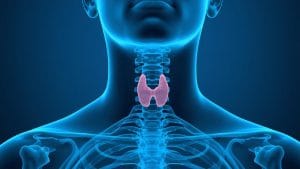
A newly published review article in the New England Journal of Medicine sets out a risk-adapted approach to managing differentiated thyroid cancer, the most common form of the disease.
What the Review Covers
The New England Journal of Medicine has published a review article on the management of differentiated thyroid cancer, authored by three specialists: Laszlo Hegedüs MD, Lori J. Wirth MD, and R. Michael Tuttle MD. The piece centres on risk-adapted management — an approach that tailors treatment intensity to the individual patient’s level of risk rather than applying a one-size-fits-all protocol.
The journal shared the publication on its official account, drawing attention to Figure 1 of the article, which visually maps out this risk-adapted framework. It’s the kind of clinical tool that helps doctors and patients understand where on the treatment spectrum a given case sits — from active surveillance at the lower end through to more aggressive intervention for higher-risk presentations.
Why Risk-Adapted Care Matters
Differentiated thyroid cancer accounts for most thyroid cancer diagnoses. According to Cancer Research UK, thyroid cancer is one of the few cancers where incidence has been rising, partly due to improved detection of smaller tumours that might previously have gone unnoticed. That detection shift makes the question of how aggressively to treat any given case all the more pressing.
Risk-adapted management isn’t new as a concept, but formalising it in a major review published by one of the world’s most widely read medical journals gives it renewed clinical weight. The approach attempts to avoid overtreating low-risk patients — sparing them from unnecessary surgery, radioactive iodine therapy, or long-term hormone suppression — while ensuring those with genuinely aggressive disease receive timely, appropriate care.
The Limits of What We Know From This Post
It’s worth being clear about what the tweet itself confirms and what it doesn’t. The post links to the full review article but does not summarise its specific findings or recommendations. No statistics from the review have been independently verified for this report. Readers wanting the full clinical detail should access the article directly through the New England Journal of Medicine.
The authoring clinicians — Hegedüs, Wirth, and Tuttle — are named but no direct quotes from the review are available from the source material used here.
—
Source: @NEJM
Key Takeaways
- The New England Journal of Medicine has published a review on differentiated thyroid cancer management, co-authored by three named medical specialists
- The review focuses on risk-adapted care — matching treatment intensity to individual patient risk levels
- The specific clinical recommendations within the full article have not been independently verified for this report
What This Means for Kent Residents
Kent residents who have received a thyroid cancer diagnosis, or who have concerns about thyroid health, should speak to their GP in the first instance rather than drawing conclusions from social media posts or journal announcements alone. NHS Kent and Medway provides cancer care pathways through its network of hospitals, and any changes to clinical guidelines would be implemented by specialist teams, not self-directed by patients. If you have an urgent health concern, contact NHS 111 or, in an emergency, call 999.